

The Ministry of Transportation didn’t like what they were seeing from the City of Greater Sudbury's commercial vehicle operators.
They sent the city a warning letter, prompting an influx of “remedial and proactive training” and spurring city council to approve the hiring of an additional driver certification instructor.
City council’s decision to hire the instructor was made during last week’s 2026 budget deliberations, to address and annual training shortfall of approximately 2,025 hours across the municipal fleet.
The hire will supplement the current staffing of two driver certification instructors and 1,048 part-time hours at a net cost of $134,308.
In the business case, it’s noted that the city’s Commercial Vehicle Operator Registration (CVOR) rating was at risk and that action was needed “to mitigate the risk of fines or program suspension.”
Sudbury.com sought additional context regarding what this means and what prompted the warning letter to be sent, through city Transit Services director Brendain Adair this week.
The letter was sent because the ministry didn’t like where the city’s rating was headed in April, Adair said, noting that it has since improved slightly.
“It was a letter saying your CVOR has increased, and we want to see a reduction," Adair said, describing the rating increase as reflecting collisions, convictions and inspections.
So, what changed to push the city over the limit?
The big difference, Adair said, was the city’s introduction of red light and automated speed enforcement cameras.
This, he clarified, is no excuse.
“That’s not saying there shouldn’t be an awareness,” he said, adding that he’s not exactly thrilled by the 67 automated enforcement tickets issued last year across all municipal vehicles (21 red lights and 46 speed).
That said, these numbers are “somewhat anecdotal” since they represent the total number of tickets issued, of which some were successfully fought.
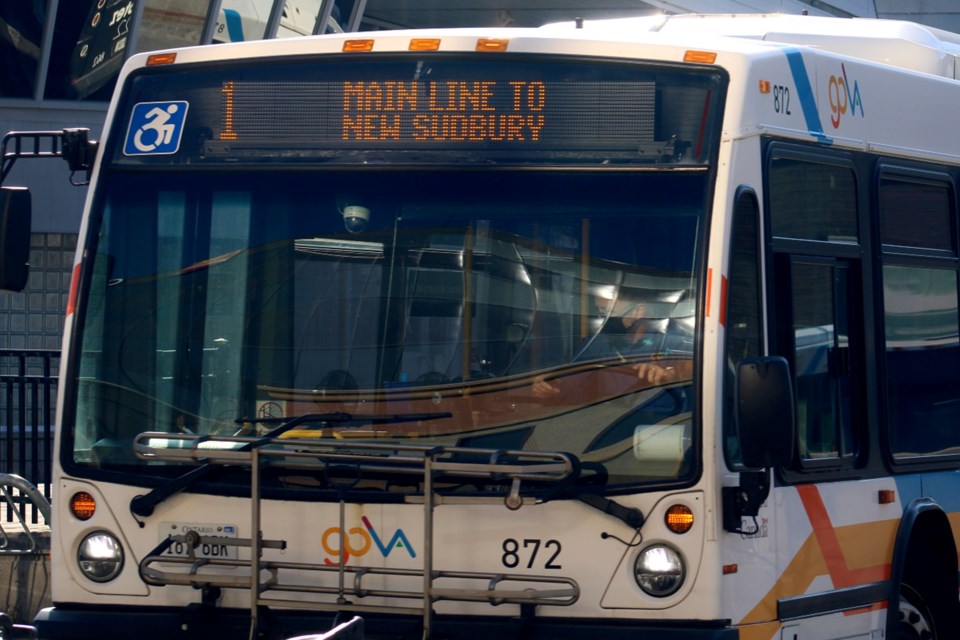
The tickets include 41 issued to municipal emergency vehicles (15 EMS, seven fire, 19 police), leaving 26 for the balance of municipal vehicles. Three were assigned to GOVA Transit vehicles.
This, against a total of 9.2-million kilometres of travel per year among municipal commercial vehicles, of which 4.4 million was GOVA Transit. The city has 320 commercial vehicles, 450 commercially licenced operators.
After providing this context, Adair clarified that he’s still not happy to see three violations assigned to GOVA Transit vehicles.
“We preach being on time, but not at the expense of speeding or doing anything unsafe,” he said. “I’m not going to say I’m celebrating three enforcement tickets, because that does have an impact on our overall rating as an organization, but that is something that we’re going to coach our employees through and hope to mitigate that.”
Meanwhile, there were 169 collisions recorded across the entire municipal fleet last year, of which 92 were considered preventable.
Preventable collisions, Adair said, is a subjective title the city assigns to incidents “where an operator didn’t use all of their tools or training to have avoided that collision.”
There were 144 collisions reported in 2023, of which 92 were viewed as preventable, which is the same number of incidents the city classified as such in 2024.
Meanwhile, although Adair said the city’s CVOR has improved slightly since hitting a level which prompted a Ministry of Transportation warning letter, Adair said the city’s future hire of a full-time driver certification officer should help even further.
Plus, he said, eliminating the annual training shortfall of driver training and testing, they’ll reduce the chances of being short operators across the organization, since anyone who operates a vehicle, be it commercial or passenger, needs to pass a drive test.
The city’s three driver certification officers will work “both on a proactive and reactive basis,” he said.
“We’re sticklers for our staff to make sure we’re documenting things properly and that our staff are ensuring the safest actions when they’re operating a vehicle on behalf of the city,” Adair said. “If we’re seeing an opportunity to coach an employee through maybe driving a bit slower, ensuring braking a bit earlier; more safe driving actions, then that's what we’re ultimately striving for.”
Tyler Clarke covers city hall and political affairs for Sudbury.com.