

Dismissing any notion they’re a mere “cash grab,” as Premier Doug Ford has repeatedly stated, Ward 9 Coun. Deb McIntosh said that she hopes he reconsiders legislation to scrap them.
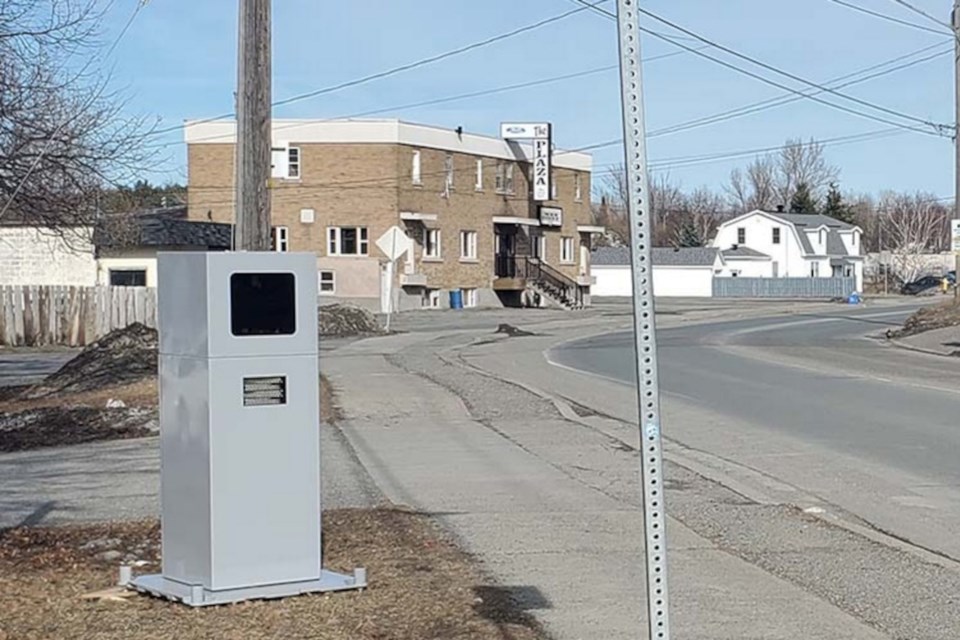
“This was working for us,” she said of Greater Sudbury’s collection of six automated speed-enforcement cameras, which shift locations along a list of priority streets every four months.
“They’re always saying find efficiencies, well, one of the ways you find efficiency is through technology,” she said. “You can’t have the police everywhere.”
Sudbury.com reached out to McIntosh because she was one of the key advocates on city council who championed the local adoption of automated speed-enforcement cameras.
This week, Ford announced that legislation was forthcoming to prevent municipalities from operating automated speed enforcement cameras, as Greater Sudbury has done since March 2024.
In making this announcement, Ford made false claims, according to reporting by The Trillium, a Village Media website devoted exclusively to covering provincial politics at Queen’s Park.
Ford claimed “they’re not slowing people down,” which is false in numerous jurisdictions throughout Ontario where motorists have, in fact, slowed down, including in Greater Sudbury.
At the six locations Greater Sudbury’s cameras were situated late last year, all six locations found the number of people exceeding the speed limit by more than 15 km/h drop. Data has also shown that motorists slow down upstream and downstream of cameras, and maintain lower speeds even after they’ve been removed.
Ford also said that cities are using the cameras as a cash cow and that mayors have told him “not one dollar” has gone into traffic-calming efforts. However, numerous cities, including Greater Sudbury, have been using speed camera revenue for traffic calming.
Active since March 22, 2024, the city’s speed cameras brought in a net municipal revenue of $753,003 last year, which is being spent on various traffic calming efforts.
In banning speed cameras, Ford pledged to create a new fund for traffic-calming measures like speed bumps, roundabouts, raised crosswalks, curb extensions and signage.
“I don’t know if it’ll compensate us for the amount we need,” McIntosh said. “We have 3,600 lane kilometres of road and only 440 kilometres of sidewalk, and kids ride their bikes and walk on these roads, and the traffic that’s going by is not abiding by the rules and the speed limit.”
On this front, she noted that the city puts up signs alerting motorists to the locations of automated speed-enforcement cameras, and they choose to speed anyway, as evidenced by the 12,796 tickets the speed cameras resulted in the issuance of last year As such, she’s not convinced that Ford’s pledge to fund more signs will help.
Whereas speed camera revenue is currently funding traffic-calming efforts in Greater Sudbury, McIntosh said that getting rid of them would punt the burden to the general tax base and not just those who choose to exceed posted speed limits.
“It’s definitely not a cash grab for us, because we are using that money to respond to residents’ concerns,” she said, flagging traffic volume and speeds as the top concerns that routinely come up in conversations with the public.
“I think it's unfortunate that (Ford) has decided to go down this road, and I really hope he will reconsider,” McIntosh said. “We just want people to slow down.”
While McIntosh was receptive to talking about automated speed-enforcement cameras with Sudbury.com, Mayor Paul Lefebvre was not.
On Thursday, Sudbury.com requested a phone interview with Lefebvre to get his response to Ford’s proposed legislation and his opinion on the devices. Not only was our request denied, but a brief written response provided by his office neglected to address our inquiry’s two key points.
Instead, the non-committal response read, “I can share as Mayor Lefebvre has previously stated, he is open to working with the province on road safety and will wait for the final legislation to be tabled so he can review it before commenting further.”
A City of Greater Sudbury spokesperson (part of a communications team through which city policy requires all media inquiries to filter through) was similarly short on insights.
Sudbury.com asked what the city’s approach to the cameras would be and whether Ford’s announcement would prevent the city from placing its six automated speed-enforcement cameras in new locations next month, as planned.
“We are reviewing next steps and how to proceed based on yesterday's announcement,” the spokesperson said. “More information will be communicated early next week.”
Sudbury.com sent a media inquiry to Ford’s office on Friday to request details on what they’d do to replace the revenue stream for traffic-calming measures and their rationale for opposing a revenue stream for traffic-calming which is only paid by motorists who exceed the speed limit.
A response from the Ministry of Transportation was as follows:
“Too many municipalities are using speed cameras as a cash grab. Repealing municipal speed cameras is about fairness and keeping life affordable, not raising revenue on the backs of hard-working Ontarians. Our government is protecting taxpayers while putting road safety first, with a new provincial fund to help municipalities implement proven traffic-calming measures like speed bumps, raised crosswalks, curb extensions, roundabouts and stronger signage.”
Tyler Clarke covers city hall and political affairs for Sudbury.com.