

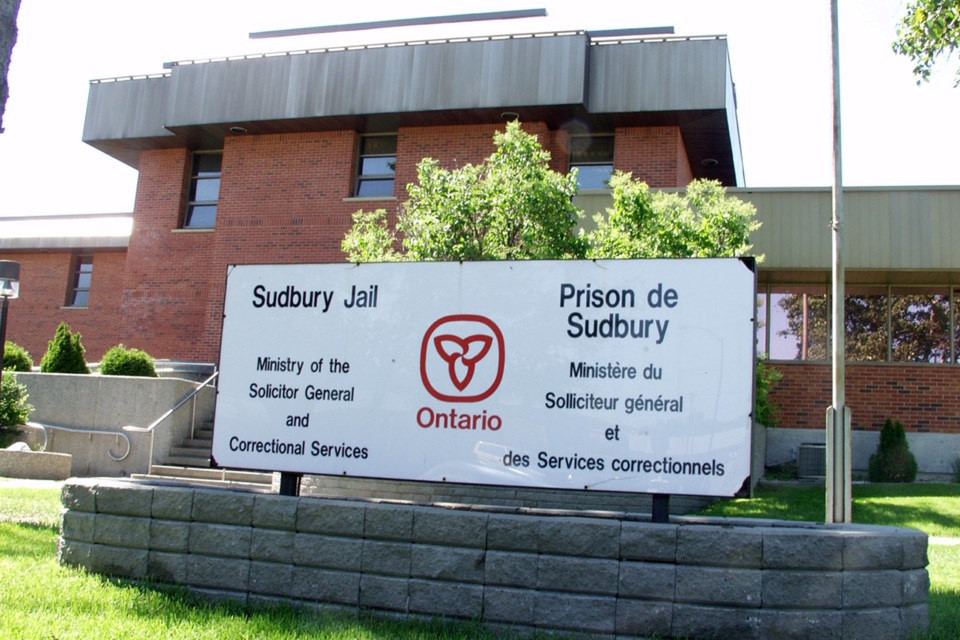
The so-called pipeline from jail to homelessness, as described in a new report by the John Howard Society, is having another effect in the City of Greater Sudbury.
The lack of affordable housing has caused the pipeline to curve back on itself, sending people back to jail at a greater rate because they are homeless.
Incarceration is both a leading cause of and a result of homelessness, finds From Incarceration to Encampment, the first of a three-part Re/Thinking Justice series from the John Howard Society of Ontario.
Sara-Jane Berhammer of the John Howard Society of Sudbury has seen the pipeline first hand, and told Sudbury.com the report was a mirror of what is happening in the Nickel City.
As of July 31, there were 215 people residing in encampments across 48 Greater Sudbury locations, but it’s important to note that in that same month “37 per cent of individuals residing in encampments were represented on the By-Name List.”
When people are incarcerated, they lose their Ontario Works (OW) and Ontario Disability Support Program (ODSP) payments, which for many means loss of housing.
But 80 per cent of those incarcerated in provincial correctional facilities like Sudbury District Jail are in remand custody, meaning they have not been convicted on any charge. The report also found that the majority of these people will be released without a conviction.
For Berghammer, It brought to mind several clients at the John Howard Society, and one in particular: a client who has housing but was arrested and denied bail. His income supplement is gone, and soon after, he’ll lose his housing; he has no idea how long he’ll be in custody, waiting for his matter to move through the courts.
And so his name goes back on the By-Name list, and through the Homelessness Network “we go back to doing an intake again and trying to find them housing again,” said Berghammer. “And it's just around and around we go.”
That’s true even if someone is only in custody for a short time. For instance, a person commits a petty theft to get warm, feed a habit, or feed a dog, all cases Berghammer has seen, and becomes homeless as a result.
“Even if they're only in for 10 days,” said Berghammer, they still are penalized by the system. She said that in these specific cases, through the Homelessness Network, they have tried to cover housing fees.
“Especially when we know that the charges are not serious or relatively minor, so that someone wouldn't lose their place,” said Berhammer. “But it doesn't always work, and that's a problem.”
But even if housing were available ― and it often isn’t in Sudbury ― it may not be available to all. The report points out discrimination in the rental market, noting “many people with criminal records struggle to overcome the stigma of past involvement with the criminal justice system.”
“There's a lot of shady things going on as some of our workers are trying to find housing for people,” said Berghammer of the new stipulations that landlords make based on the demand for apartments.
“They're asking for police record checks. They're asking for a viewing fee to view an apartment, and who's going to pay for that when you have no money? So it automatically precludes people from going to see a place.”
It’s also illegal, she said, “but it's being done anyway.”
Berghammer said transitional housing for those who need it, such as the 40 beds now operating at Lorraine Street, is the best path forward for these clients.
“If we're trying to prevent people from getting involved with the system, over and over and over, then transitional housing is the way to go,” she said. “When we provide service to our local jail here in Sudbury, and people request a jail visitation, the number one thing they want to talk about is pre-release planning.”
She said that through their affiliation with the Homelessness Network (as one of seven Sudbury organizations under the umbrella) they used to go to the jail and complete an intake form immediately so as soon as someone was out of custody, their housing was in place.
“But this idea of rapid housing is long gone, and now, we're waiting for people to be released before we even do a Sudbury housing application,” said Berghammer. “It’s for a number of reasons, but we're just at a complete standstill. We can't even house the people that are out now, never mind that are being released from jail.”
She said the idea of provincial transitional housing is “wonderful,” especially in light of what she said are the disadvantages that people continue to face when released from jail.
For her, No.1 is poverty, and “second and third is mental health and addiction issues.”
Transitional housing is also much more cost effective, states the report. Based on Ontario numbers: “Intensive supportive housing for mental health and addictions costs between $2,000-$5,000 per month to operate, which is significantly less than psychiatric hospitals ($31,500/month), mental health facilities ($17 000/month) and correctional facilities ($11,000/month).”
A side-effect of the lack of housing is that any housing available is quickly snapped up by those who were chronically homeless, even in buildings that are geared to seniors or those who are disabled, as is that case at both Twelve Elgin and Centreville in Sudbury, causing friction and occasionally violence between the two parties.
“When people are chronically homeless, they really lose any kind of life skills they may have acquired,” said Berghammer, noting it can even be the simplest skills.
“They're not thinking about doing laundry; they're thinking about just changing their clothes. They come into our office all the time and say they want to change their clothes. We say, ‘do you realize you can do laundry?’ And they don’t,” she said.
Even if someone is as stable as they could be when they enter jail, that may not be the case on the way out, said Berghammer.
“The conditions of the jail, the level of violence in the jail — even seeing your cellmate die of an overdose or hang themselves in jail — I mean, it's completely traumatizing.”
And then, many head right back out to the streets. The report states that one in six admissions to provincial jails had no fixed address, meaning they “lacked stable housing” prior to their arrest. If others lose housing while in custody, that’s even more being released into homelessness.
“Being released into homelessness results in poorer health and social outcomes and increased risk of reoffending,” states the report.
Berghammer agrees. She said it's often violence on the streets, petty theft and other survival crimes. Some have even given up the idea of having a home.
“There are a number of our clients that have said, ‘I don't want to talk about housing, I'm here to just get some food or just to get some clothes, but I don't want to talk about housing because I'll never be housed’,” Berghammer said. “And they've kind of come to terms with that and that's so disheartening.”
This could be the reason fewer than 40 per cent of those living in encampments in Sudbury have joined the housing list.
Sudbury.com also asked Berghammer about a recent data report from the CBC. The national media company filed an Freedom of Information Act request against Correctional Services of Canada, which netted them a full copy of what they requested, rather than the heavily redacted one they were later sent and asked to use.
CBC analyzed the earlier, unredacted version sent to them in error and found that the leading cause of death for inmates serving determinate sentences between January 2019 and February 2025 was suicide. Overdoses came a close second.
The data said 45 per cent of inmates who died by suicide on their timed sentence had already served more than three-quarters of it; 39 per cent had served more than half.
Other numbers from the data package allowed them to conclude that inmates with a so-called fixed release date — those who knew the exact day they would get out— were dying more frequently than those who were inside indefinitely, and they were dying close to their release date.
“Isn't that interesting, very interesting, that people are dying just before the release? To me, it speaks to desperation, speaks to the uncertainty. These folks that are in these institutions, they don't want to be in the situation that they're in, but they can't seem to get out,” she said.
“It's our job to help them do better, and again, it goes right back to transitional housing, making certain there's enough beds available to get people out and to help people along the way,” said Berghammer. “They've suffered enough, and we ultimately want people well and contributing to our community.”
Jenny Lamothe covers vulnerable and marginalized populations, as well as housing issues and the justice system for Sudbury.com.